
PAVOI 14K Gold Plated Dainty Pear Pendant Necklace for Women | Tear Pendant Necklaces
$13.95
View on Amazon →
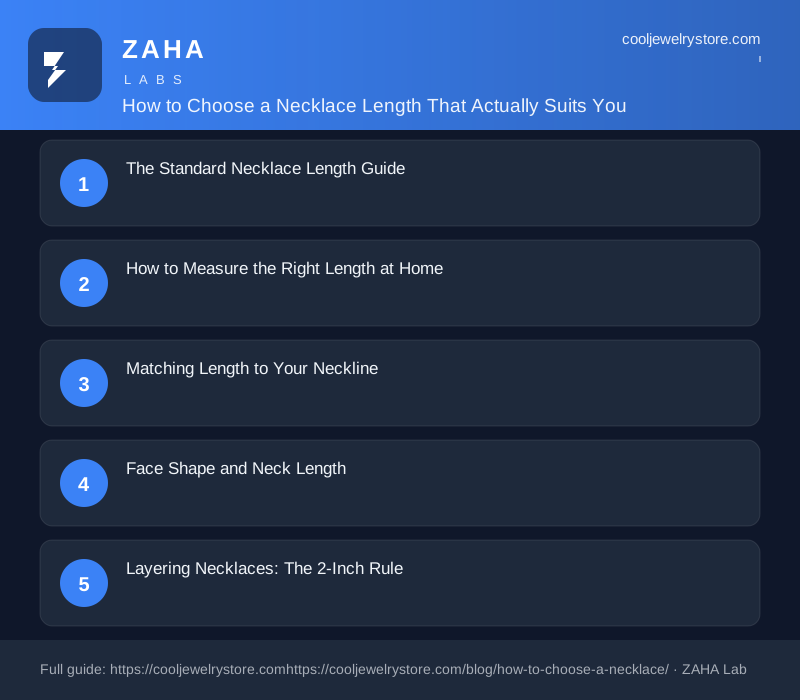
Published 17 September 2026 · updated 2026-09-17 · by Cool Jewelry Store
Most women own at least one necklace that never gets worn — the length is simply off. For most UK shoppers, 18 in (45 cm) is the safest starting point: it sits just below the collarbone, clears nearly every neckline, and works with or without a pendant.
Getting that right from the start saves you from the drawer of forgotten jewellery. This guide covers what the measurements mean, how to match them to your body and clothes, and what to check before you click buy.
Length dictates everything: where a pendant falls, how a chain works with your neckline, and whether a style looks deliberate or accidental. The naming conventions — choker, princess, opera — come from traditional jewellery retail, but a 16-inch "choker" from one brand may be 15 or 17 inches from another. Always look at the actual measurement in centimetres rather than the label.
| Length | Where It Sits | Best For |
|---|---|---|
| 14–16 in (35–40 cm) | Base of neck / collarbone | Choker styles, petite frames, high necklines |
| 18 in (45 cm) | Just below the collarbone | Most versatile everyday length; suits the majority of shoppers |
| 20–22 in (50–55 cm) | On the chest | V-necks, scoop necks, layering as a mid strand |
| 24 in (60 cm) | Above the bust | Pendants, lariats, relaxed or boho styling |
| 28–30 in (70–75 cm) | At or below the bust | Long opera style, longest layer in a stack |
| 36 in+ (90 cm+) | Below the bust or doubled | Rope styles, worn doubled for a two-strand effect |
The table uses inches because most UK listings follow the international standard, with centimetre equivalents in brackets — useful when comparing with a European retailer or a piece you already own.
You do not need a jeweller or a specialist tool. Grab a piece of string, hold it against your neck at roughly the position you want, mark or cut it, then lay it flat and measure. That gives you your working length.
Alternatively, take a necklace you already own and like, lay it flat on a table, and measure from clasp to clasp. That figure is the total wearing length — the number you will be comparing against a product listing.
Cut a strip of paper to your target length and hold the ends together at the back of your neck. Slide it up or down to see exactly where the midpoint falls on your body — fast, free, and accurate before you spend anything on a new piece.
If you are buying for someone else and cannot measure them, 18 in is the safest default for an adult woman. For men, 20–22 in typically sits at the base of the chest without looking too short or too long.
This is where the most common buying mistakes happen. The principle is simple: the necklace should sit clearly above the neckline, visibly within it, or clearly below — never disappearing under the fabric edge.
A 16–18 in chain sits just above the fabric and creates a clean visual layer. A longer chain that dips below the neckline gets hidden and adds nothing to the look.
A pendant that echoes the V shape works well at 18–22 in. Ideally the pendant tip aligns with or just above the lowest point of the V. Going too short means the pendant catches on the neckline seam rather than draping cleanly.
Your collarbone is on full display, so a 14–16 in collar or choker draws attention there and frames the look. Long chains dangling against bare skin can look lost rather than styled.
Anything short is hidden entirely. A longer chain at 24–30 in sits outside the neckline and adds visual interest. This is one of the few contexts where a very long necklace looks proportionate rather than overwhelming.
Fairly versatile — 18 in works as a base, but 20–22 in keeps the pendant centred within the scoop rather than catching on the curved fabric edge.
Both expose the collarbone cleanly. A 16–18 in chain that echoes the horizontal line tends to look the most considered. A simple chain with no pendant often works better here than a competing focal point.
The numbers in the table are starting points. How a given length actually looks depends on your neck length and the proportions of your face.
Shorter necks: Avoid chokers at 16 in and under, which can visually shorten the neck further. An 18–20 in chain with a small pendant creates a downward visual line that makes the neck appear longer.
Longer necks: Almost every length works well, but chokers and collar necklaces are particularly flattering — they fill space in a way that looks intentional rather than sparse.
Rounder face shapes: Longer pendants from 20 in onwards draw the eye downward and elongate the face. Avoid chunky wide-set collars that add visual width at the jaw line.
Angular or longer face shapes: Wider collar-style necklaces or short-to-mid layered stacks balance the proportions. A single long thin chain can accentuate length rather than complement it.
Product images almost always use models with a specific neck length and height. A 20-inch chain sitting mid-chest on a tall model may rest near the collarbone on a shorter person, or below the bust on someone taller still. Always read the stated measurement in centimetres in the listing details, and check whether an extender chain is included — that extra 2 inches can mean the difference between the length you want and the one you end up with.
Layered necklaces work when each chain is clearly distinct from the next. The practical minimum between layers is 2 in (5 cm). Less than that and chains tangle, sit on top of each other, and lose their individual presence.
A reliable starting stack:
Add a fourth layer at 28–30 in to maintain visible separation. Mixing chain styles — a fine cable, a slightly chunkier rope or box chain, something with texture or a charm — looks more intentional than three identical chains at different lengths. Mixing metals works naturally in casual contexts; keeping to one metal tends to look more considered for formal wear.
Length sets the position; chain style controls how the necklace moves and hangs on the body.
Cable chain: Uniform oval links, the most common type. Lies flat, accepts a pendant cleanly, and suits a wide range of styles.
Box chain: Square links give a slightly more structured, contemporary look. Works well both standalone and with a pendant.
Rope chain: Twisted links add texture and visual weight. Drapes beautifully but is heavier than it looks — worth considering for all-day comfort.
Figaro chain: Alternating short and longer links in a classic Italian pattern. Typically worn alone; the variation between links adds visual interest without being formal.
Curb chain: Flat interlocked links that lie flush against the skin. Often found in chunkier styles, worn as a statement piece in its own right.
Snake chain: Smooth, flexible, and elegant in appearance — but avoid putting a heavy pendant on a snake chain. The collar can buckle under anything more than a very light charm.
The clasp is the part most likely to fail, and it rarely gets much attention in product photos.
Lobster clasp: The most reliable common option — a spring-loaded claw that locks securely. Look for one large enough to open easily, especially if you are buying for someone with limited dexterity or arthritic hands.
Spring ring: Smaller and more fiddly than a lobster clasp. Fine for lightweight delicate chains, but avoid on anything with a heavy pendant.
Toggle clasp: A bar through a ring — elegant and easy to use with one hand. Check that the bar is significantly longer than the ring opening; if the proportions are close, it can slip free unexpectedly.
Magnetic clasp: Convenient for anyone with difficulty with small fastenings, but can open near other metal objects or bag hardware. Not recommended for active daily wear.
Also check whether the listing includes an extender — a short length of extra chain before the clasp. This lets you adjust between two lengths, which is genuinely useful if you are between sizes or plan to layer.
Buying without trying on is inherently guesswork unless you read the listing carefully.
Browse our necklace picks to find curated Amazon options — chosen with everyday UK shoppers and real budgets in mind.


For a petite frame, 16–18 in is the most flattering range. A choker at 14–16 in can look delicate and proportionate, while 18 in — sitting just below the collarbone — is the reliable everyday option. Avoid lengths over 24 in unless you are layering; a very long chain can drag the eye downward and make a shorter frame appear smaller. An 18-in chain with a modest pendant is the safest starting choice.
Measure the widest point of your head at ear level — typically between 55 and 60 cm. Any necklace whose total length exceeds that measurement can be worn over the head without using the clasp. A standard 20-in (50 cm) chain is borderline for many people; a 22–24 in chain will clear most head sizes comfortably. Always check the listed length in centimetres rather than relying on a named size.
Short necklaces are completely hidden by a high neckline, making them a wasted purchase. Go for 24 in or longer — enough to sit clearly outside the fabric and create visual interest. A single long pendant or a simple rope chain at 24–30 in looks clean and intentional. Avoid anything too heavy; a substantial chain can pull a fine knit out of shape with repeated wear over the course of a day.
It depends on how you wear it. 18ct gold contains 75% pure gold, has a richer warm colour, and is less likely to cause a nickel reaction — but it is softer and more prone to scratching with daily wear. 9ct gold contains 37.5% pure gold, is harder and more durable, and is typically less expensive. For a necklace worn constantly, 9ct or gold vermeil over sterling silver is a practical, budget-conscious choice.
As an Amazon Associate we earn from qualifying purchases. Prices and availability are accurate as of the date shown and are subject to change — the price on Amazon at checkout is the one that applies.
Coordinate bridesmaid jewellery without buying identical pieces — UK guide to necklines, metal tones, necklace lengths and what to
Find the most flattering earrings for your face shape. A practical UK guide to oval, round, square, heart, oblong and diamond face
A practical UK guide to necklace lengths: what the measurements mean, how to match them to your neckline and proportions, and what